胚胎植入前基因診斷(下) --第六十屆美國生殖醫學會年會重點摘要 胚胎植入前基因診斷(下) --第六十屆美國生殖醫學會年會重點摘要
|
|
|
奇美醫院生殖醫學科主任 蔡永杰醫師 |
|
目前施行胚胎植入前基因診斷的切片時間可分為卵子的極體切片、分裂胚胎的胚葉切片(Fig.1)與囊胚切片。其中分裂胚胎的胚葉切片可說是運用最為廣汎的一種,一般說來是在胚胎完成第三次分裂後進行切片(約受精後第三天、胚胎分裂到六到八個細胞時)。至於囊胚切片則由於受限於離胚胎植入時間太近因此在臨床的運用不多。
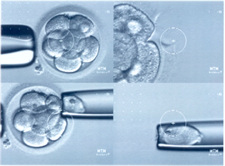
Fig.1:八細胞期胚胎切片
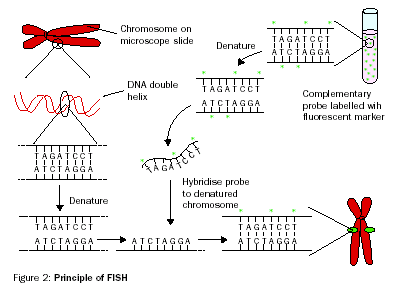
分析方法:施行胚胎植入前基因診斷切出來的細胞可用:1. 聚合𡓨鍊反應(PCR)將特異的染色體(DNA)序列擴大來診斷單一基因遺傳性疾病(monogenic disease)。2. 螢光原位雜交(FISH):鑑定胚胎細胞的”染色體套數”(ploidy),也就是染色體數目。常做的染色體為13,15,16,17,18,21,22,X和Y的分析(Fig.2)。
3. 比較性基因原位雜交法(comparative genomic hybridization,CGH):將對照細胞的DNA放大後染成紅色,再將欲檢測細胞的DNA放大後染成綠色,再視綠色/紅色的比率線與標準中央線的偏離率(0.75-1.25)作出染色體是monosomy(偏左過0.75) or trisomy(偏右過1.25)的診斷8 (Fig.3)。
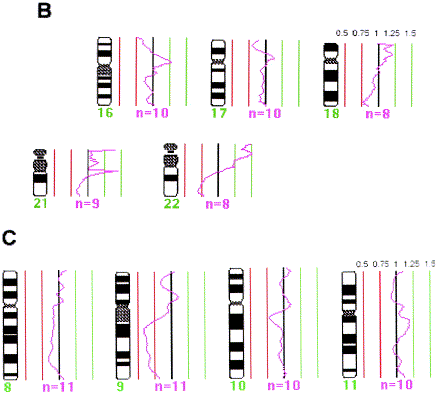
Fig.3:B:Monosomy 22,C:Partial Monosomy for 9q
。和螢光原位雜交(FISH)比較起來其好處是46條染色體都應該可以被清楚呈現,而其壞處是處理時間約需三天,因此目前只運用在卵子的極體切片9。
切片過的胚胎適合冷凍嗎? 目前並不建議將切片過的胚胎冷凍、因為即使使用改良過的冷凍方法10、使用冷凍保存第三天切片過的胚胎其成功率並不高11,12。
誤判率:根據ESHRE PGD 團隊在2002年的報導,胚胎植入前基因診斷其誤判率約為 2%(8/451),其中五例使用PCR,誤判率約為 3%(5/145); 三例使用FISH,誤判率約為 1%(3/305) 13。
懷孕的結果:根據國際PGD工作小組2001年的報導,接受胚胎植入前基因診斷的試管嬰兒週期其懷孕率與沒接受基因診斷的週期相當14。Strom 等人比較顯微注射中接受PGD的新生兒也發現無論在懷孕過程、出生體重或其它方面也與一般嬰兒無異15。
胚胎植入前基因診斷的適應症:單基因遺傳性疾病(monogenic disease)如β 海洋性貧血(β -thalassemia)、囊腫纖維病變(cystic fibrosis)、脆弱X 染色體症候群(fragile X Syndrome)等,性聯遺傳疾病如X-linked mental retardation,染色體異位異常如Reciprocal and Robertsonian translocation,非倍數染色體的篩檢(PGD for aneuploidy screening,PGD-AS)。 其中PGD-AS可說是目前使用最為普遍的PGD。一般說來像高齡婦女,有習慣性流產病史,多次試管嬰兒失敗等等都可適用,目前市面上有現賣的探子,常做的染色體為13,15,16,17,18,21,22,X和Y共九個。由於有鑲崁子(Mosaicism)的問題,因此PGD-AS的誤判率約為6-7%16。
結論
由於技術上仍有其限制,全面的試管嬰兒治療上使用胚胎植入前基因診斷目前尚無法施行。不過對某些特定的族群,此技術將使我們有更好的胚胎選擇, 並使我們能減少胚胎的植入數目並進而降低多胞胎妊娠。 希望隨著不斷進步的實驗室技術,我們將可植入更少的胚胎而卻不會犧牲掉應有的懷孕率。
Reference
-
Handyside A, Kontogianni E, Hardy K, Winston R. Pregnancies from biopsied human preimplantation embryos sexed by Y-specific DNA amplification. Nature 1990; 344: 768–70.
-
Colls P, Chen S, Fischer J, et al. Preimplantation genetic diagnosis (PGD) reduces pregnancy loss in patients with previous recurrent miscarriages (RM). Program and abstracts from the American Society for Reproductive Medicine 60th Annual Meeting; October 16-20, 2004; Philadelphia, Pennsylvania. Abstract O69.
-
Werlin LB, Rodi I , DeCherney A, et al. Preimplantation genetic diagnosis (PGD) as a beneficial tool in women with recurrent pregnancy loss (RPL) and advanced maternal age (AMA). Program and abstracts from the American Society for Reproductive Medicine 60th Annual Meeting; October 16-20, 2004; Philadelphia, Pennsylvania. Abstract P-299
-
Turkaspa I, Cieslak ,J Morris R, et al. Preimplantation genetic diagnosis (PGD) for aneuploidy significantly improves ART and pregnancy outcome I Turkaspa et al. Program and abstracts from the American Society for Reproductive Medicine 60th Annual Meeting; October 16-20, 2004; Philadelphia, Pennsylvania. Abstract O72.
-
Stevens J, Wale P, Surrey ES, et al. Is aneuploidy screening for patients aged 35 or over beneficial? Program and abstracts from the American Society for Reproductive Medicine 60th Annual Meeting; October 16-20, 2004; Philadelphia, Pennsylvania. Abstract
-
Oter M, Sandalinas M, Colls P, et al. PGD of aneuploidy to reduce multiple gestations and maintain high pregnancy rates in women 35 and older. Program and abstracts from the American Society for Reproductive Medicine 60th Annual Meeting; October 16-20, 2004; Philadelphia, Pennsylvania. Abstract O75.
-
Boada M, Carrera M, De la Iglesia C, Sandalinas M, Barri PN, Veiga A. Successful use of a laser for human embryo biopsy in preimplantation genetic diagnosis: report of two cases.J Assist Reprod Genet 1998; 15: 302–07.
-
Wilton L, Voullaire L, Sargeant P, Williamson R, McBain J Preimplantation aneuploidy screening using comparative genomic hybridization or fluorescence in situ hybridization of embryos from patients with recurrent implantation failure
Fertil.Steril 2003 80, 4, 860-868)
-
Wells D, Escudero T, Levy B, Hirschhorn K, Delhanty J, Munn眤 S. First clinical application of comparative genomic hybridisation and polar body testing for preimplantation genetic diagnosis of aneuploidy.Fertil Steril 2002; 78: 543–49.
-
Jericho H, Wilton L, Gook DA et al. 2003 A modified cryopreservation method increases the survival of human biopsied cleavage stage embryos. Human Reproduction 18, 568–571.
-
Joris H, Van den Abbeel, De Vos A et al. 1999 Reduced survival after human embryo biopsy and subsequent cryopreservation. Human Reproduction 14, 2833–2837.
-
Magli MC, Gianaroli L, Fortini D et al. 1999 Impact of blastomere biopsy and cryopreservation techniques on human embryo viability. Human Reproduction 14, 770–773.
-
ESHRE PGD Consortium Steering Committee. ESHRE Preimplantation Genetic Diagnosis Consortium: data collection III (May 2001). Hum Reprod 2002; 17: 233–46.
-
Anon. Report of the 11th annual meeting of International Working Group on Preimplantation Genetics: preimplantation genetic diagnosis—experience of 3000 clinical cycles. Reprod BioMed Online 2001; 3: 49–53.
-
Strom C, Levin R, Strom S, Masciangelo C, Kuliev A, Verlinsky Y. Neonatal outcome of preimplantation genetic diagnosis by polar body removal: the first 109 infants. Pediatrics 2000; 106: 650–53.
-
Munn眤 S, Sandalinas M, Escudero T, Marquez C, Cohen J. Chromosome mosaicism in cleavage-stage human embryos: evidence of a maternal age effect. Repr BioMed Online 2003; 4: 223–32.
|
|
|